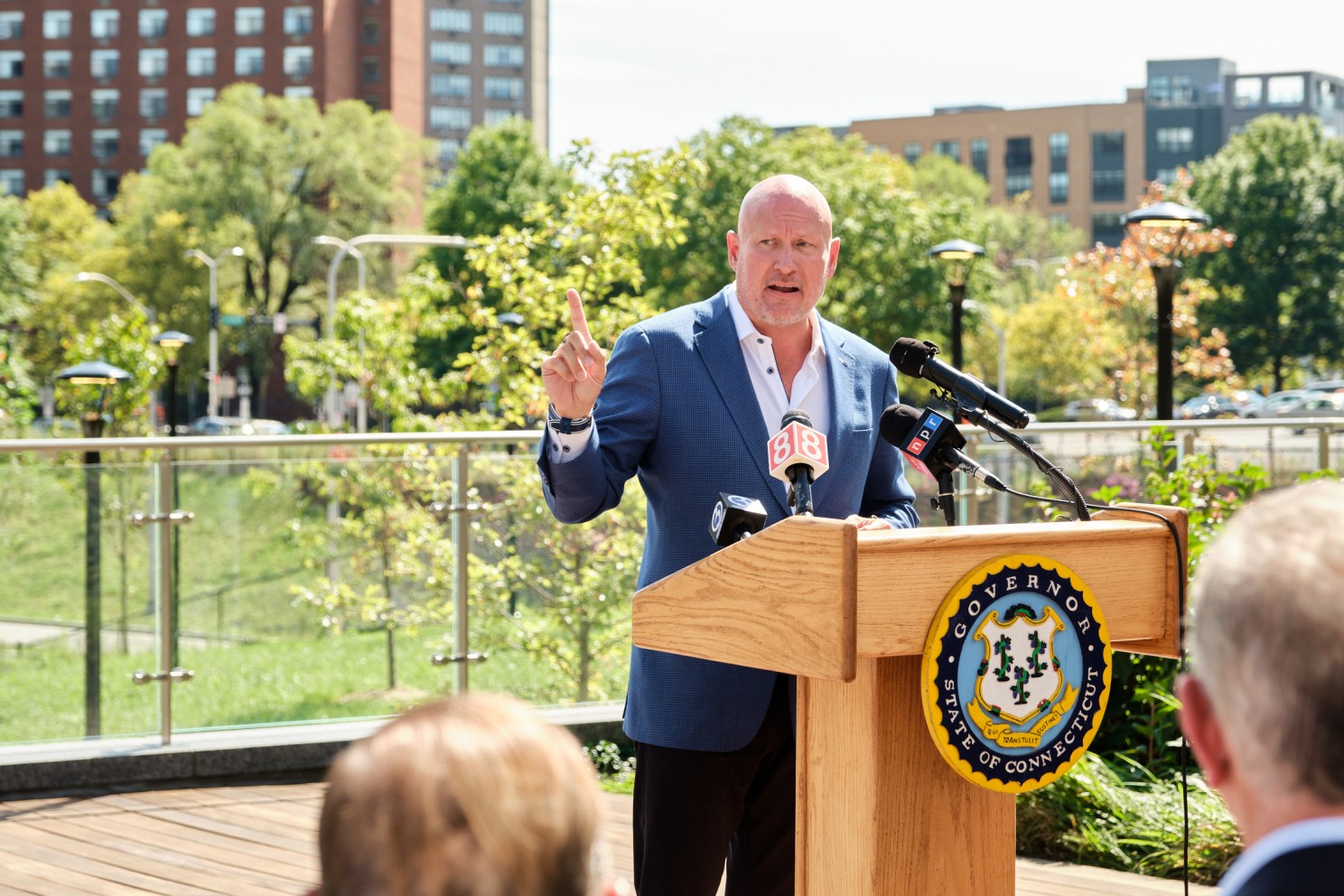


On September 26, Governor Ned Lamont announced a $50.5 million investment in downtown New Haven — the first major award under Connecticut's newly launched Innovation Clusters Program, administered by the Department of Economic and Community Development. It was an unseasonably warm day, and the mood matched the weather. The investment spans public infrastructure, life sciences development, and a $10 million commitment to QuantumCT: the nonprofit that serves as the statewide coordinating body for quantum infrastructure, research, and commercialization. QuantumCT was launched by Yale and UConn in 2023.
The broader cluster investment tells a coherent story about what Connecticut is trying to do. New Haven already has a dense concentration of quantum expertise. The public infrastructure dollars are designed to build the physical connective tissue around that intellectual density. The theory is that proximity and shared infrastructure accelerate commercialization in ways that no single institution can manufacture alone. It's a reasonable theory, and Connecticut has the assets to test it seriously.
The proposal itself — the program architecture, the strategic narrative, the measurable deliverables — required a command of the community landscape, the institutional dynamics, and the funding logic, and then the ability to translate all of that into something decision-makers could evaluate and trust. That work took time. When the announcement came, the weight of the effort and the significance of the outcome matched.
And not many moments do.